



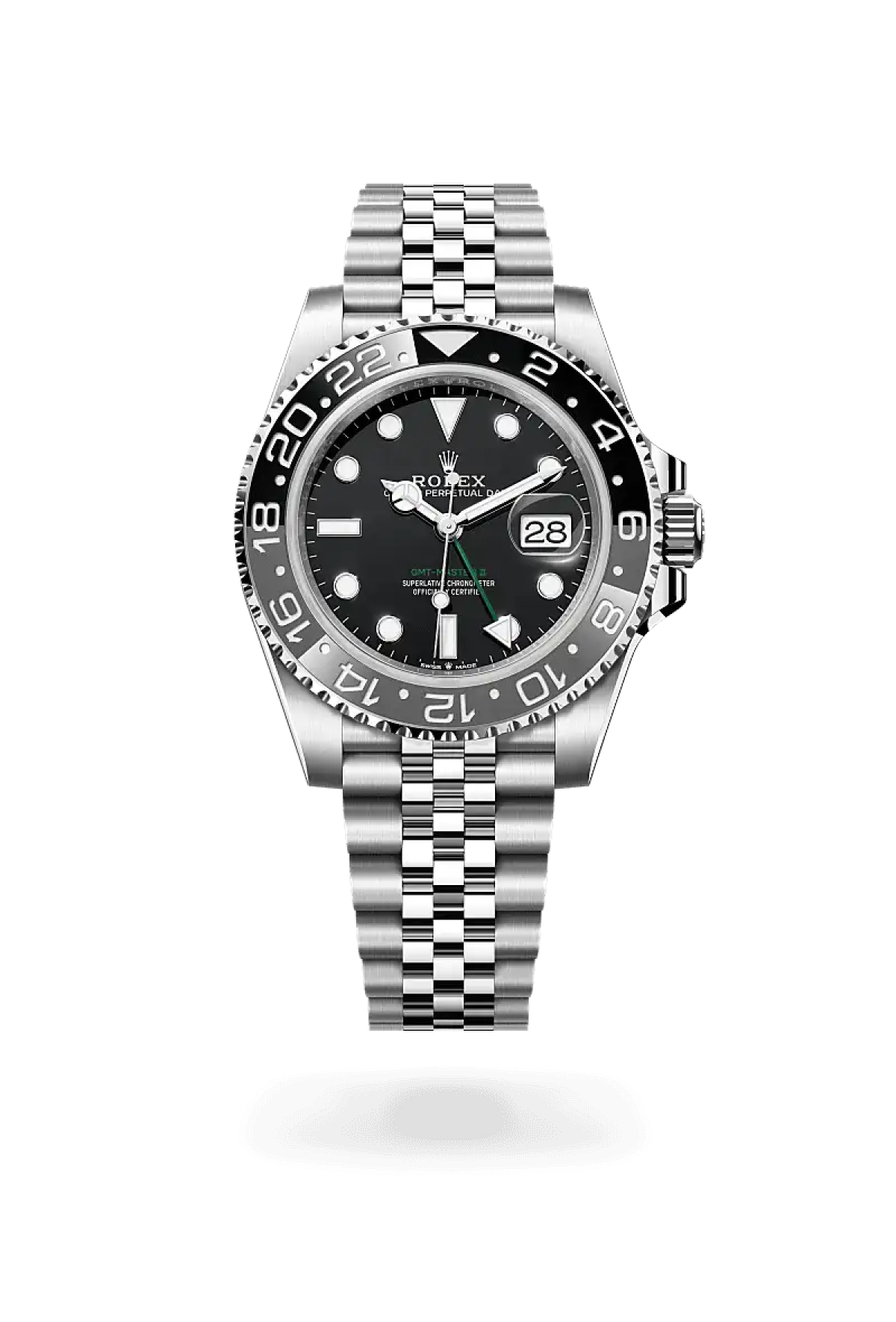
Introduction to the Rolex GMT-Master II
The Rolex GMT-Master II is one of the most iconic travel watches, specifically designed for pilots and global travelers.
The original GMT-Master was launched in 1955, developed at the request of Pan American World Airways (Pan Am) to provide its flight crews with a watch capable of displaying two time zones simultaneously.
Key Features of the GMT-Master II:
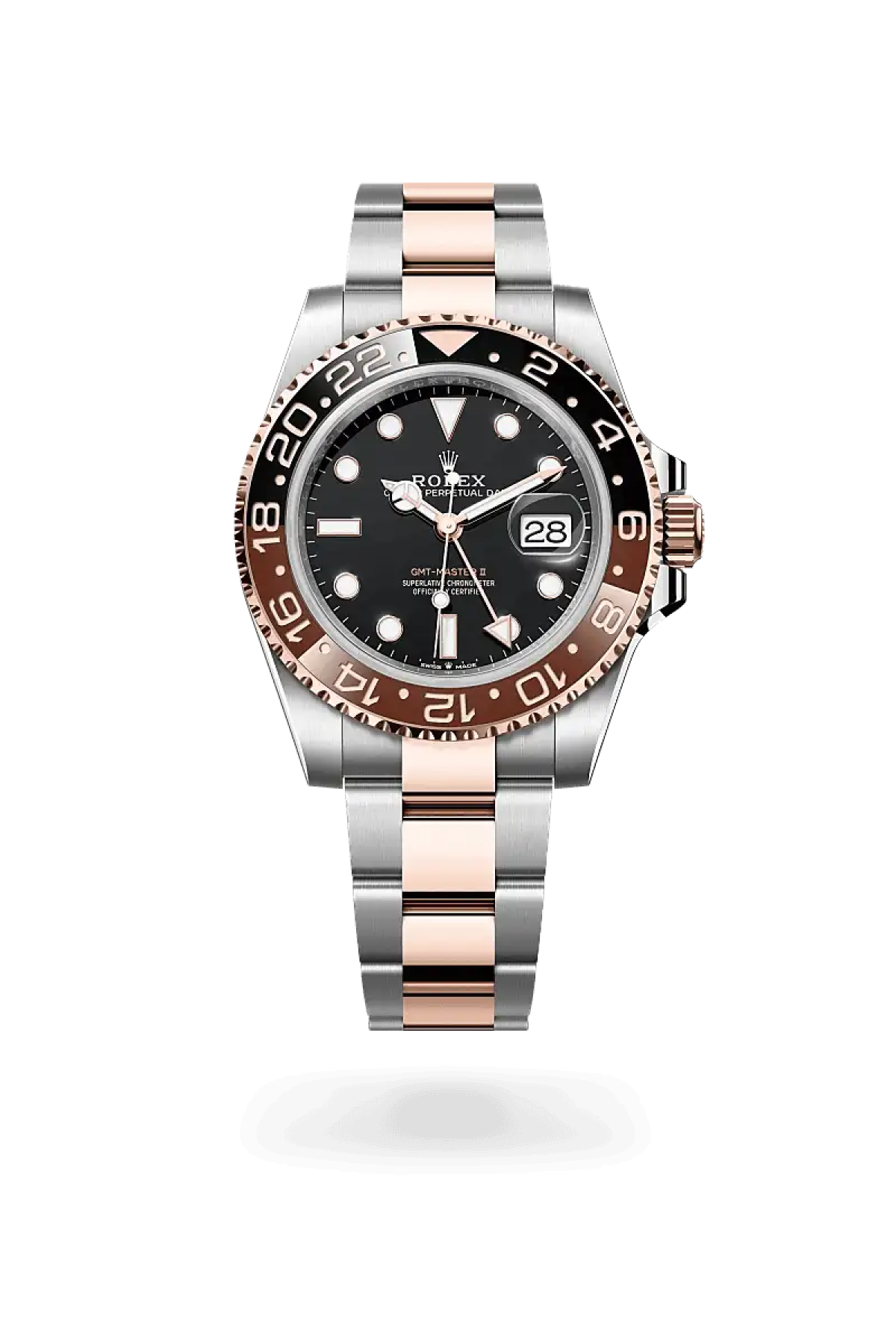
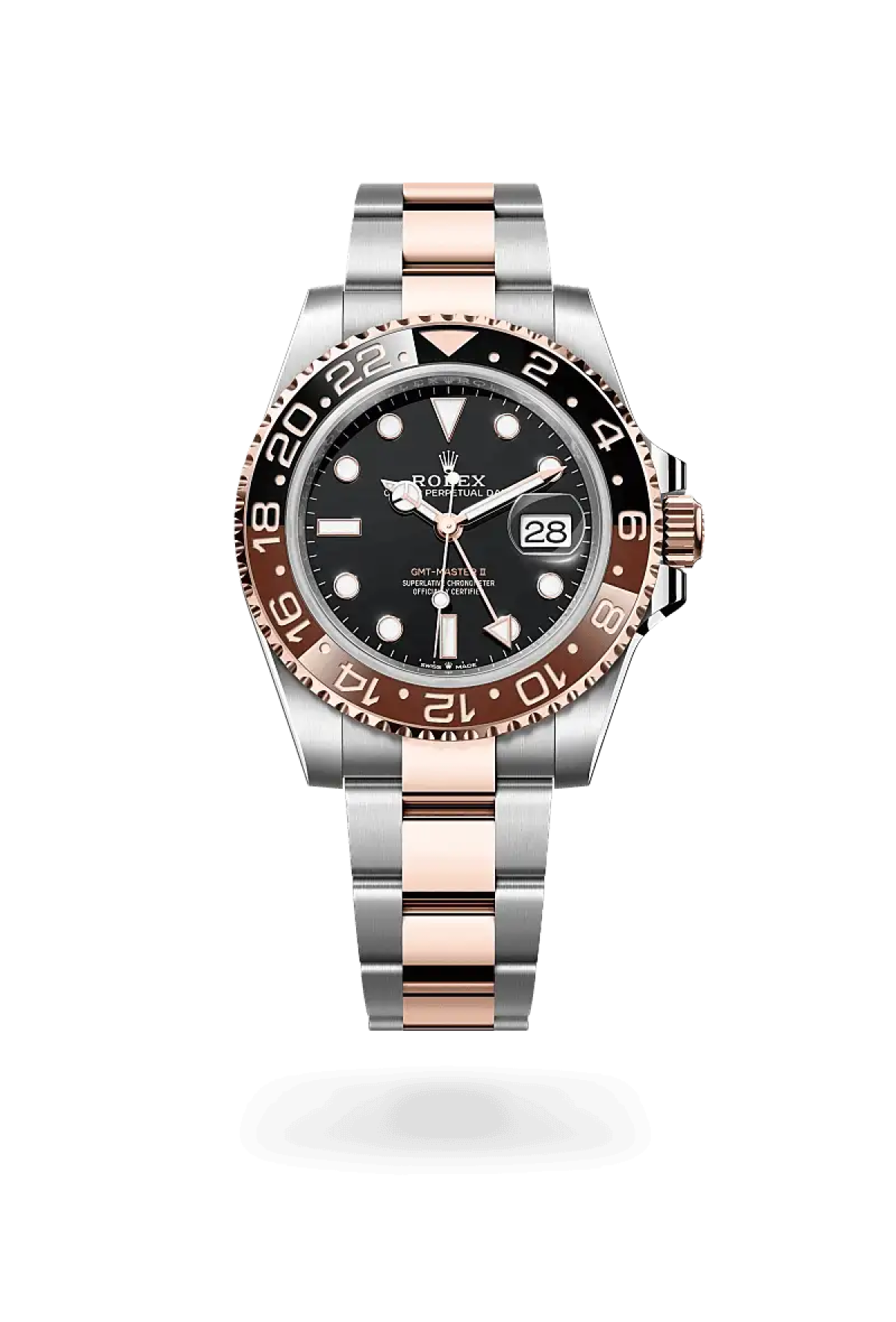
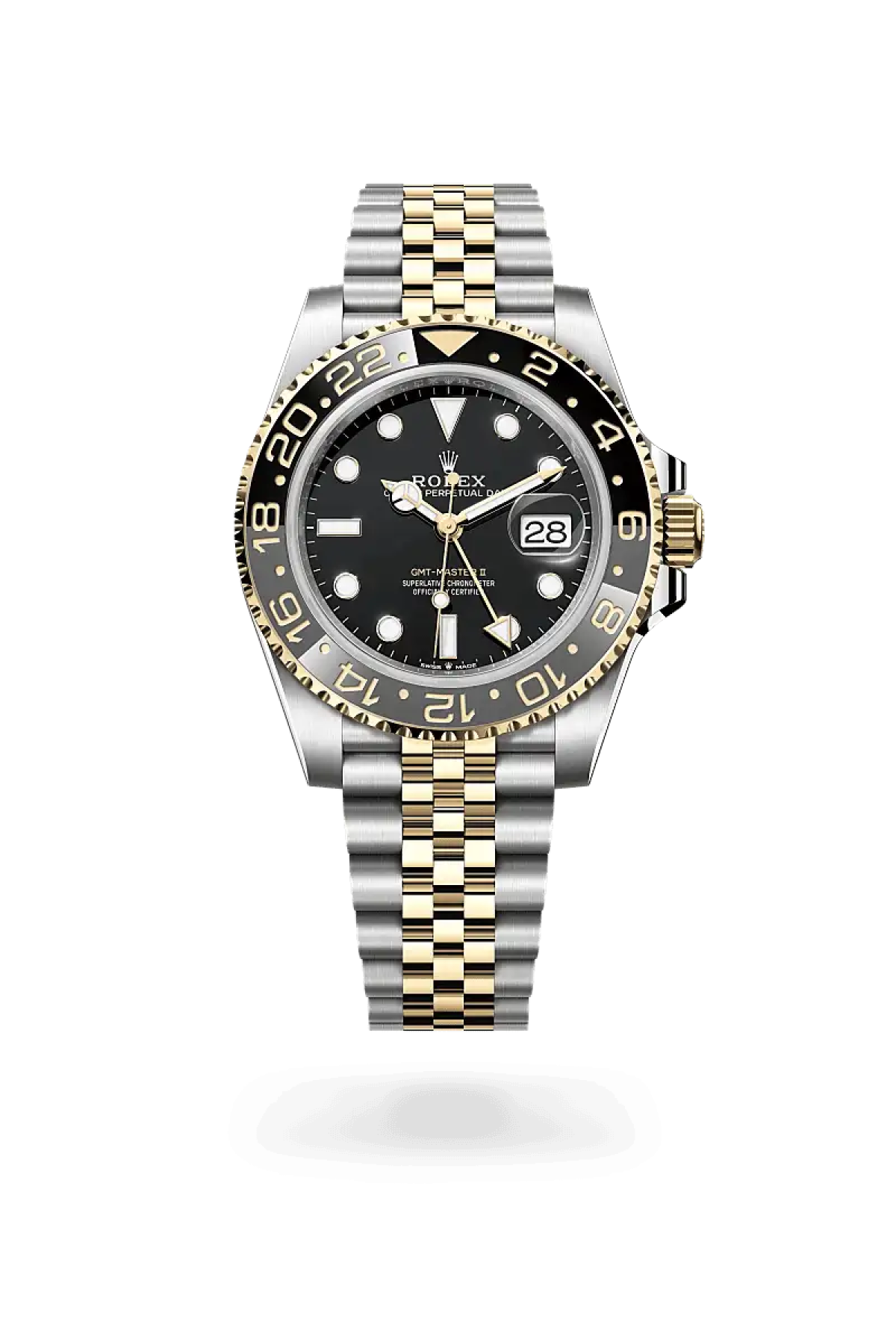
GMT Function (Dual Time Zone): This is the primary feature. The watch has four hands: an hour hand, a minute hand, a seconds hand, and a fourth hand (usually with a triangular tip) that completes one full rotation every 24 hours. This 24-hour hand points to a second time zone (for example, “home time”) on the bezel.
Bidirectional 24-Hour Rotating Bezel: The bezel is graduated with 24-hour markings. By rotating the bezel, the user can quickly read a third time zone.
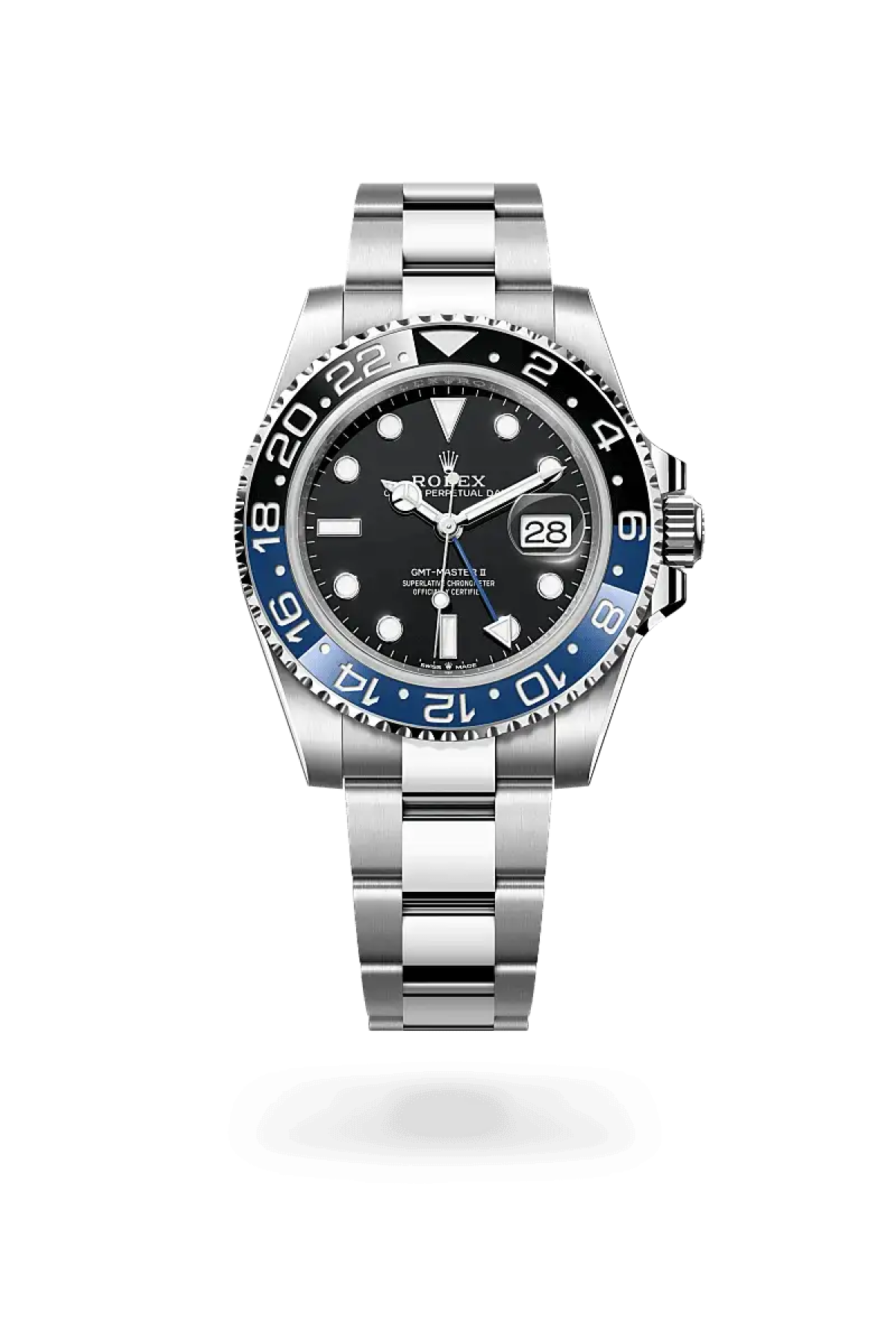
Two-Tone Cerachrom Bezel: The most recognizable feature of the GMT-Master II is its two-color Cerachrom ceramic bezel. Famous color combinations have their own “nicknames”:
“Pepsi”: Red and Blue (symbolizing day and night).
“Batman” / “Batgirl”: Black and Blue.
“Sprite”: Green and Black (a left-handed version).
The “Master II” Difference: The GMT-Master II version (introduced in 1982) offered a crucial upgrade. It allows the main 12-hour hand to be adjusted independently (in one-hour “jumps,” forward or backward) without stopping the minute hand, seconds hand, or 24-hour hand. This makes it extremely fast for travelers to change their “local time” upon arriving in a new time zone, while keeping their “home time” on the GMT hand.
Thanks to its combination of superior functionality, robust design (waterproof Oyster case), and iconic aesthetics, the GMT-Master II has become one of the most sought-after sports watches in the world
Data is being updated...
Please come back later!
Take another look